Disclosure: This post contains affiliate links. If you click a link and make a purchase, we may earn a commission at no extra cost to you. We only recommend products we trust.
When you’re facing a genuine wilderness emergency, your knife becomes more than just a tool—it transforms into your lifeline for shelter building, fire preparation, food processing, and emergency signaling. The debate between fixed blade and folding survival knives has divided outdoor enthusiasts for decades, yet the answer isn’t as simple as declaring one superior to the other. Understanding the distinct advantages, limitations, and real-world performance of each design empowers you to make an informed decision that could genuinely save your life when conditions turn critical.
Why Your Knife Choice Matters More Than Ever
The outdoor recreation industry has witnessed explosive growth in recent years, with wilderness participation increasing substantially as people seek authentic experiences away from digital saturation. This surge has brought both seasoned adventurers and complete beginners into remote environments, creating a critical need for reliable emergency equipment. Recent search engine data reveals that queries for survival knives have increased by over forty percent, indicating that more people recognize the importance of proper blade selection before venturing into backcountry areas. Unfortunately, this heightened interest has also flooded the market with substandard products that fail when you need them most, making educated purchasing decisions more crucial than ever.
The stakes of choosing the wrong survival knife extend far beyond wasted money or disappointment with a purchase. Search and rescue statistics consistently show that individuals equipped with appropriate tools experience significantly better outcomes during unexpected overnight stays or injury situations in wilderness settings. A quality survival knife enables you to construct emergency shelters, process firewood efficiently, prepare cordage from natural materials, signal for rescue, and address medical emergencies through improvised first aid applications. Conversely, a knife that breaks during batoning, loses its edge after minimal use, or features a design incompatible with essential survival tasks can transform a manageable situation into a life-threatening crisis.
The fixed blade versus folding knife debate represents more than personal preference—it reflects fundamentally different philosophies about wilderness preparedness and risk management. Fixed blade advocates emphasize maximum strength, reliability, and versatility for extended survival scenarios where the knife must perform countless demanding tasks without failure. Folding knife proponents prioritize portability, legal compliance in various jurisdictions, and the practical reality that most outdoor enthusiasts never face true survival emergencies. Understanding these competing priorities and how they align with your specific outdoor activities, skill level, and risk tolerance forms the foundation for selecting a knife that genuinely serves your needs rather than simply occupying space on your belt.
Understanding Fixed Blade and Folding Knife Architecture
Fixed blade knives represent the oldest and most straightforward knife design, featuring a single piece of steel that extends from the blade tip through the entire handle without any moving parts or mechanisms. This construction method, known as full-tang when the steel extends the full width and length of the handle, creates an incredibly strong tool capable of withstanding extreme lateral pressure, heavy batoning for wood splitting, and prying tasks that would destroy lesser designs. The blade steel remains exposed and accessible at all times, eliminating deployment delays during emergencies when seconds matter. Handle materials like wood, micarta, or rubberized compounds attach directly to the tang using pins, screws, or adhesives, creating a unified tool that functions as an extension of your hand during extended use.
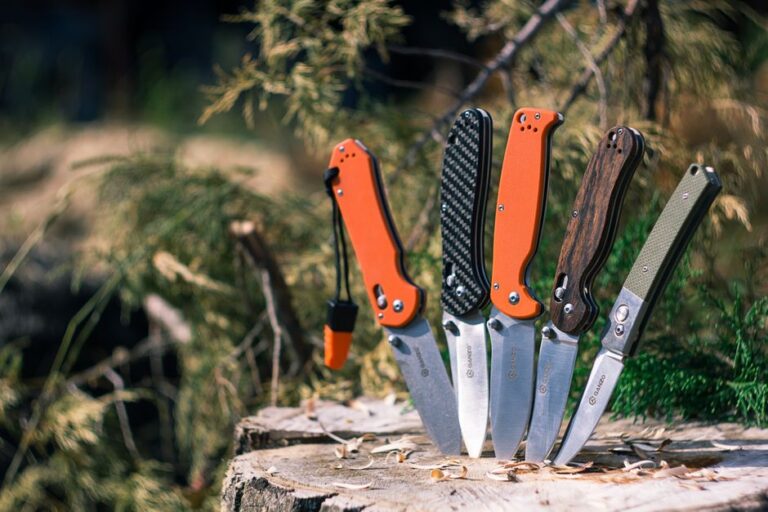
Folding knives employ a pivot mechanism that allows the blade to rotate into the handle for compact storage and safer carrying when not in use. Modern folding survival knives utilize locking mechanisms—liner locks, frame locks, or back locks—that secure the blade in the open position to prevent accidental closure during use. This engineering complexity introduces multiple potential failure points including the pivot pin, locking mechanism, and the blade-to-handle junction that must withstand forces during cutting tasks. However, these mechanical components also enable remarkable portability, with substantial blade lengths folding into pocket-sized packages that integrate seamlessly into everyday carry systems. Advanced folding designs incorporate additional survival features like integrated fire starters, glass breakers, and seatbelt cutters, transforming a simple cutting tool into a comprehensive emergency kit.
The metallurgical considerations for survival knives differ significantly between fixed and folding designs due to their distinct stress patterns and intended applications. Fixed blade survival knives typically employ carbon steel alloys like 1095 or tool steels that offer superior edge retention and ease of field sharpening using natural stones, though they require more maintenance to prevent rust in humid environments. Stainless steel variants like 420HC provide excellent corrosion resistance for marine or tropical environments while sacrificing some edge-holding capability. Folding knives often utilize stainless steels to minimize maintenance requirements since their concealed position makes regular cleaning more challenging, though premium folders may feature exotic steels like S30V or M390 that deliver exceptional performance across multiple metrics.
Blade geometry fundamentally impacts how effectively a survival knife performs essential wilderness tasks, with different grinds optimizing specific cutting actions. Scandi grinds, featuring a single bevel from the spine to the edge, excel at woodworking tasks like carving, feather stick creation, and precise notching for trap construction. Full flat grinds taper gradually from spine to edge, creating excellent slicing geometry for game processing and food preparation while maintaining sufficient strength for general camp tasks. Saber grinds leave more steel behind the edge for enhanced durability during heavy-duty applications like batoning and prying. Understanding these geometric principles helps you evaluate whether a particular knife design aligns with your anticipated survival priorities, whether that emphasizes shelter construction, food procurement, or general versatility across multiple scenarios.
Real-World Performance Testing and Selection Criteria
Professional survival instructors and experienced wilderness guides consistently emphasize specific performance benchmarks when evaluating survival knives through rigorous field testing protocols. The batoning test—driving a knife through wood using a wooden baton to split logs for fire preparation—reveals structural integrity under extreme lateral stress that would never occur during normal cutting. Fixed blade knives with full-tang construction and blade lengths between four and six inches typically excel in this application, with models like the ESEE-4 and Morakniv Garberg earning reputations for splitting substantial hardwood without blade deflection or handle failure. Folding knives generally fail batoning tests or suffer accelerated wear on locking mechanisms, though some heavy-duty tactical folders with reinforced pivot assemblies can handle light batoning of smaller diameter softwoods in emergency situations.
The extended carving and feather stick creation test evaluates edge retention, handle ergonomics, and blade geometry through repetitive fine motor tasks that simulate shelter construction and fire preparation activities. A quality survival knife should produce dozens of fine wood shavings without requiring resharpening, maintaining a keen edge through varied grain directions and occasional contact with dirt or bark. The BPSKNIVES Adventurer, featuring 1066 carbon steel with a true Scandi grind, demonstrates exceptional performance in this category, allowing users to create substantial quantities of tinder from damp wood through precise, controlled cuts. The walnut handle provides comfortable grip during extended carving sessions without creating hot spots or blisters that compromise your ability to perform other survival tasks. Folding knives with shorter blade lengths and pocket clip protrusions often create hand fatigue during extended carving, though premium models with contoured handles partially mitigate this limitation.
Consider a realistic scenario where a day hiker becomes disoriented in deteriorating weather conditions, requiring an unexpected overnight stay without proper gear. The individual carries a compact folding knife like the ALBATROSS 6-in-1 tactical folder, which provides adequate cutting capability for processing small diameter branches into a debris shelter frame and creating basic cordage from bark strips. The integrated LED light proves invaluable for navigating to a suitable shelter location after darkness falls, while the magnesium fire starter enables fire creation despite damp conditions. However, the limited blade length restricts processing larger wood for an extended fire, and the folding mechanism accumulates debris during intensive use, requiring periodic cleaning to maintain smooth operation. This scenario illustrates how folding knives can adequately address short-term emergencies while highlighting their limitations during extended survival situations.
The Gerber StrongArm represents the gold standard for fixed blade survival knives designed specifically for tactical and wilderness emergency applications. Its full-tang 420HC stainless steel construction delivers exceptional strength for batoning, prying, and striking tasks while maintaining corrosion resistance in harsh environments. The rubberized diamond-texture grip ensures secure handling even with wet or bloody hands during game processing or emergency medical situations. The included MOLLE-compatible sheath provides versatile carry options that integrate with tactical gear, hiking packs, or vehicle emergency kits. Field testing reveals that the StrongArm maintains a functional edge through processing an entire deer, constructing a debris shelter, and preparing several days worth of firewood—the comprehensive task spectrum that defines genuine survival knife capability. This level of performance justifies the premium price point for individuals who venture into remote wilderness areas where equipment failure carries serious consequences.
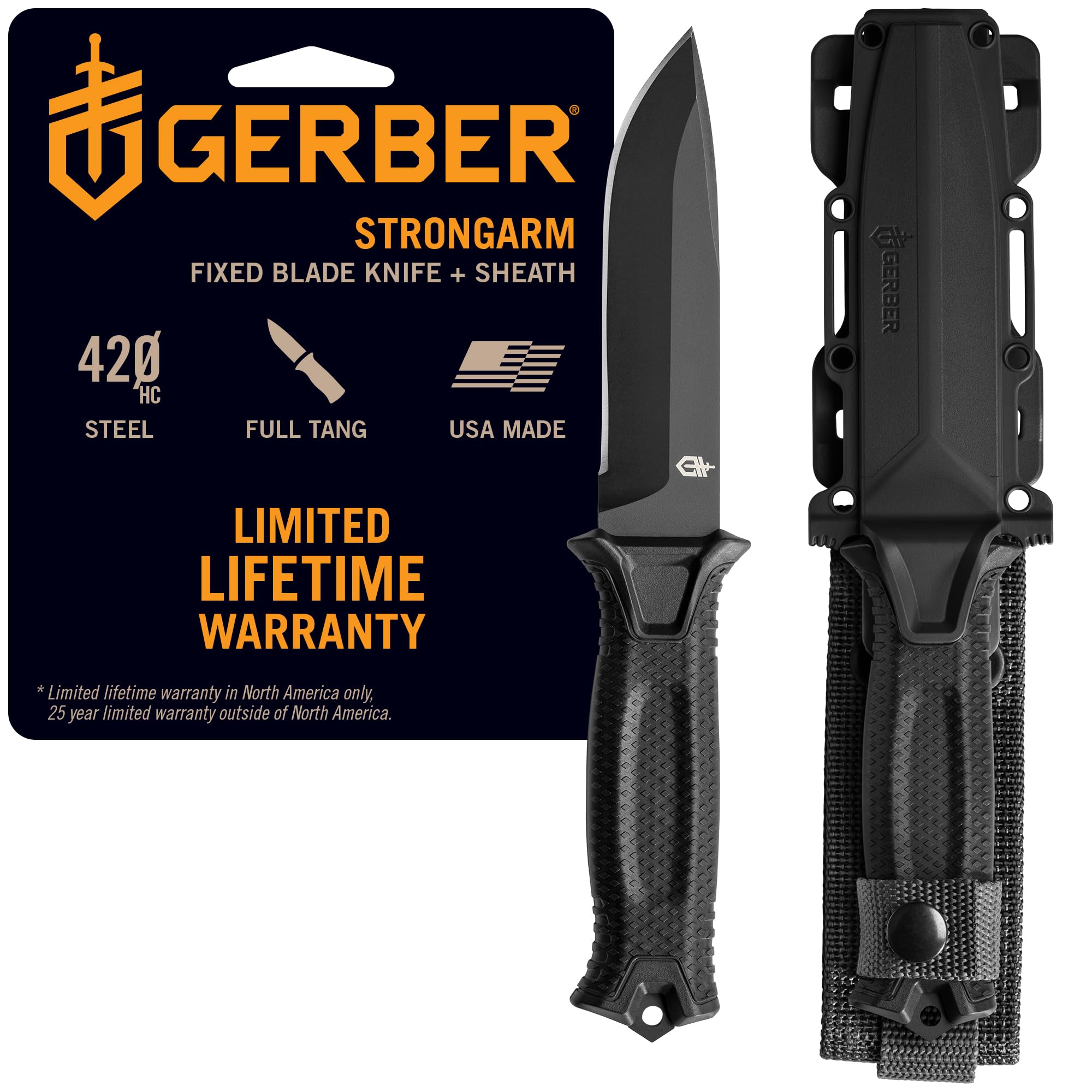
Gerber Gear StrongArm Fixed Blade Knife – Tactical Survival Knife for Camping & Hunting – Made in USA – Plain Edge – Black Plain edge Black 4.8″
Iconic Strongarm Design: This Gerber Gear fixed blade knife features a full-tang, 420HC Steel with a plain edge that’s renowned for its corrosion resistance, edge retention, and strength • Dependable Cutting Knife: Our camping knife boasts a rubberized diamond-texture grip for secure handling • Versatile Knife Sheath: The StrongArm knife includes a MOLLE-compatible sheath for adaptable carry options, ensuring the hunting knife is accessible
Critical Mistakes and Safety Considerations
The most dangerous mistake outdoor enthusiasts make involves purchasing survival knives based purely on aesthetic appeal or marketing claims without understanding fundamental design principles that determine real-world performance. Tactical-styled knives with aggressive serrations, oversized guards, and hollow handles filled with survival trinkets often sacrifice structural integrity and practical functionality for visual impact. Hollow handle survival knives represent particularly problematic designs, as the threaded connection between blade and handle creates a catastrophic failure point during heavy use—numerous documented cases exist of these knives separating during batoning or prying, leaving users with a useless blade tang and no handle. Similarly, knives with excessive blade length beyond seven inches become unwieldy for detailed work while adding unnecessary weight, and their intimidating appearance may create legal complications in certain jurisdictions or during interactions with law enforcement.
A cautionary tale from the Pacific Northwest illustrates the consequences of inadequate knife selection during wilderness emergencies. An experienced backpacker carried only a lightweight folding knife with a three-inch blade during a solo trip, reasoning that weight savings justified the compromise. When unexpected snowfall trapped him for three additional days, he discovered that his folder lacked sufficient blade length and structural strength to process the larger diameter wood necessary for maintaining a survival fire in freezing conditions. The locking mechanism began failing after intensive use, requiring him to hold the blade open manually during cutting tasks—a dangerous situation that resulted in a deep laceration requiring evacuation and medical treatment. This incident emphasizes that survival knife selection should prioritize worst-case scenario capability rather than optimizing for ideal conditions that may not materialize.
Legal considerations surrounding knife carry vary dramatically between jurisdictions, with some regions imposing strict blade length limits, concealment restrictions, or outright bans on certain knife types. Before selecting a survival knife, research the specific regulations governing your intended travel areas, including state, county, and municipal ordinances that may differ significantly. Fixed blade knives often face more restrictive regulations regarding concealed carry, while folding knives with blade lengths under a certain threshold typically enjoy broader legal acceptance. However, context matters enormously—a fixed blade knife carried openly on a hiking trail rarely generates concern, while the same knife concealed under clothing in an urban environment may violate local weapons laws. Maintain documentation of your outdoor activities and intended knife uses, and consider carrying knives in clearly marked emergency kits rather than on your person when traveling through areas with restrictive regulations. This checklist approach—research local laws, understand context-dependent restrictions, maintain appropriate documentation, and use common sense regarding carry methods—helps you avoid legal complications while ensuring access to necessary survival tools.
Building Your Survival Knife System
Developing an effective survival knife strategy requires moving beyond the false dichotomy of choosing exclusively between fixed blade and folding designs toward building a layered system that addresses different scenarios and risk levels. Your immediate quick win involves acquiring a quality folding knife for everyday carry that provides basic emergency capability without the bulk and social friction of a fixed blade. The ALBATROSS 6-in-1 tactical folder represents an excellent entry point, delivering essential cutting capability plus integrated tools like fire starter, LED light, and glass breaker that address common emergency scenarios. Carry this folder consistently in your vehicle, day pack, or pocket so that you always possess baseline survival capability regardless of your planned activities. Practice deploying the knife smoothly, familiarize yourself with the auxiliary tools, and conduct basic maintenance like cleaning the pivot and sharpening the blade to ensure reliable performance when needed.
Your medium-term objective focuses on acquiring a dedicated fixed blade survival knife for activities involving overnight wilderness travel, remote locations, or seasonal conditions that elevate risk levels. Allocate three to six months for researching specific models, reading detailed reviews from experienced users, and ideally handling knives in person at outdoor retailers to assess ergonomics and build quality. The BPSKNIVES Adventurer offers exceptional value for individuals building their first serious survival kit, combining proven carbon steel metallurgy, practical blade geometry, and included fire starter at a price point that doesn’t require extensive budget justification. Alternatively, the Gerber StrongArm provides premium performance and American manufacturing for users who prioritize maximum reliability and plan extensive wilderness travel. Invest time in learning proper knife handling techniques, including safe batoning methods, efficient carving grips, and field sharpening using portable stones or improvised materials.
Long-term mastery involves developing comprehensive knife skills through regular practice, formal training, and incremental capability building that transforms your survival knife from emergency equipment into a versatile tool you can deploy confidently across diverse scenarios. Enroll in wilderness survival courses that emphasize knife-based skills like shelter construction, trap building, and primitive fire starting to understand how different blade designs impact task efficiency. Experiment with various knife types during controlled practice sessions—process firewood using both fixed and folding knives to experience their distinct handling characteristics, attempt detailed carving projects that reveal edge geometry impacts, and practice one-handed deployment techniques for folders that might prove necessary during injury scenarios. This experiential learning reveals which knife characteristics matter most for your specific needs while building the muscle memory and technical knowledge that enables effective tool use during high-stress emergencies when cognitive function becomes impaired. Consider your survival knife system a living capability that evolves as your skills develop and your understanding of wilderness risks becomes more sophisticated through accumulated experience.
Frequently Asked Questions
What is the best knife for survival situations?
The best survival knife depends on your specific needs, but most experts recommend a fixed blade knife with a 4-6 inch blade, full-tang construction, and a blade thickness of at least 3/16 inch. Models like the Gerber StrongArm, ESEE-4, and Morakniv Garberg consistently rank highest for their proven reliability, strength for batoning, and versatile blade geometry. For everyday carry and short-term emergencies, a quality folding knife with integrated tools like the ALBATROSS 6-in-1 provides adequate capability in a more portable package.
Is it illegal to carry a survival knife?
Knife carry laws vary significantly by jurisdiction, with regulations differing between states, counties, and municipalities. Generally, fixed blade knives face more restrictions regarding concealed carry, while folding knives under 3-4 inches typically enjoy broader legal acceptance. Context matters enormously—openly carrying a fixed blade while hiking is usually legal, while concealing the same knife in urban areas may violate local laws. Always research specific regulations for your area and intended travel destinations, and carry knives in clearly marked emergency kits when traveling through regions with restrictive laws.
Should I choose a fixed blade or folding knife for wilderness emergencies?
Fixed blade knives offer superior strength, reliability, and versatility for genuine survival situations requiring shelter construction, firewood processing, and heavy-duty tasks. They have no mechanical parts to fail and can withstand extreme stress during batoning and prying. Folding knives provide better portability, legal compliance in more jurisdictions, and adequate performance for short-term emergencies or day trips. The ideal approach involves carrying a quality folder for everyday situations and a fixed blade for extended wilderness travel or high-risk environments.
What knife features are most important for survival?
Essential survival knife features include full-tang construction for maximum strength, a blade length between 4-6 inches for versatility, blade thickness of at least 3/16 inch for batoning capability, and a comfortable handle that won’t create blisters during extended use. Carbon steel offers superior edge retention and field sharpening ease, while stainless steel provides better corrosion resistance. A 90-degree spine for striking ferro rods, a practical blade grind like Scandi or flat grind, and a secure sheath with multiple carry options complete the critical feature set.
How do I maintain my survival knife in the field?
Field maintenance begins with keeping your knife clean and dry after each use, wiping away moisture, sap, and debris that can cause corrosion or gum up folding mechanisms. Carbon steel blades require a light coating of oil to prevent rust in humid environments. Maintain edge sharpness using a portable sharpening stone or strop, employing consistent angle control and light pressure. For folding knives, periodically clean the pivot area and apply a drop of lubricant to ensure smooth deployment. Store knives in their sheaths when not in use to protect the edge and prevent accidental cuts.
Can a folding knife handle batoning for firewood processing?
Most folding knives cannot safely handle batoning due to their mechanical pivot points and locking mechanisms that aren’t designed for extreme lateral stress. Attempting to baton with a typical folder risks catastrophic failure of the lock, pivot pin, or blade itself, potentially causing serious injury. Some heavy-duty tactical folders with reinforced construction can handle light batoning of small-diameter softwood in emergencies, but this significantly accelerates wear and should be avoided when alternatives exist. For reliable batoning capability, a fixed blade knife with full-tang construction remains the only appropriate choice.
Your survival knife represents far more than a simple cutting tool—it embodies your philosophy toward wilderness preparedness and your commitment to returning safely from every outdoor adventure. The fixed blade versus folding debate ultimately resolves not through declaring one design universally superior, but through honest assessment of your specific activities, skill level, and risk tolerance. Fixed blades deliver unmatched strength and versatility for extended wilderness travel and genuine survival scenarios, while quality folders provide practical everyday capability and legal compliance for the vast majority of outdoor enthusiasts who never face true emergencies. The most sophisticated approach involves building a layered knife system that addresses different scenarios, combining an everyday carry folder with a dedicated fixed blade for high-risk activities. Invest in quality tools from reputable manufacturers, develop your knife skills through regular practice and formal training, and maintain your equipment properly so it performs flawlessly when your life depends on it.
Ready to build your survival knife system with proven, field-tested equipment? Explore our comprehensive reviews and expert recommendations to find the perfect blade for your wilderness adventures. Don’t leave your safety to chance—equip yourself with knowledge and tools that perform when it matters most.