Disclosure: This post contains affiliate links. If you click a link and make a purchase, we may earn a commission at no extra cost to you. We only recommend products we trust.
Your everyday carry setup defines your readiness for life’s unexpected challenges. An EDC multi-tool transforms you from unprepared bystander to capable problem-solver, whether you’re tightening a loose screw at work, opening packages, or handling minor repairs on the trail. This comprehensive guide walks you through everything you need to know about selecting, using, and maximizing the potential of your everyday carry multi-tool.
Why EDC Multi-Tools Matter More Than Ever
The everyday carry movement has exploded in recent years, with the multi-tool market experiencing significant growth as people recognize the value of self-reliance and preparedness. Modern consumers are moving away from dependence on others for simple fixes and embracing the confidence that comes from having the right tools at hand. This shift reflects a broader cultural trend toward practical preparedness, where being equipped for daily challenges isn’t paranoia but common sense.
The stakes of choosing the right EDC multi-tool extend beyond mere convenience. When you’re miles from the nearest hardware store with a critical equipment failure, or facing a minor emergency that requires immediate action, your multi-tool becomes your lifeline. The difference between a quality tool and a cheap imitation can mean the difference between solving a problem in seconds or watching a situation deteriorate. Industry data shows that users who invest in reliable multi-tools report significantly higher satisfaction rates and actually use their tools regularly, rather than letting them collect dust in a drawer.
What makes this decision particularly important is the opportunity cost of pocket space. Most people can realistically carry only one multi-tool as part of their daily kit, making your choice a commitment that will serve you for years. The right tool becomes an extension of your capability, while the wrong one becomes dead weight that fails when you need it most. Understanding the landscape of available options, from budget-friendly workhorses to premium precision instruments, empowers you to make an informed decision that aligns with your actual needs rather than marketing hype.
The modern multi-tool market offers unprecedented variety, with manufacturers competing to deliver better ergonomics, more functionality, and improved materials at every price point. This competition benefits consumers but also creates decision paralysis. Navigating this landscape requires understanding not just what tools are available, but what problems you’re actually trying to solve in your daily life. Your EDC multi-tool should reflect your lifestyle, work environment, and the specific challenges you encounter regularly.
Understanding Multi-Tool Design and Core Components
At its foundation, an EDC multi-tool is a carefully engineered compromise between functionality, portability, and durability. The core architecture typically centers around a plier head or a knife blade, with additional tools folding into handles or attaching to a central frame. Understanding this basic structure helps you evaluate whether a tool’s design philosophy matches your needs. Plier-based designs like the Leatherman approach prioritize gripping and manipulation tasks, making them ideal for mechanical work and repairs. Knife-centric designs focus on cutting tasks with tools as secondary features, better suited for outdoor and general utility applications.
The fundamental components you’ll find across quality multi-tools include pliers with wire cutters, at least one knife blade, screwdrivers in multiple sizes and types, and basic openers for bottles and packages. These core tools handle roughly eighty percent of everyday tasks you’ll encounter. The pliers serve as your primary gripping mechanism for everything from pulling splinters to tightening nuts, while integrated wire cutters handle both soft and hard wire depending on the tool’s quality. The knife blade becomes your universal cutting solution, and screwdrivers address the countless fasteners you encounter in modern life.
Material selection fundamentally determines a multi-tool’s performance and longevity. Stainless steel remains the industry standard, offering excellent corrosion resistance and adequate strength for most applications. Higher-end tools may incorporate different steel grades for specific components, using harder steel for knife blades and more flexible steel for spring mechanisms. The Gerber Suspension-NXT exemplifies this approach with its durable stainless steel construction designed to withstand tough conditions while maintaining accessibility through its butterfly opening mechanism. Understanding these material choices helps you assess whether a tool can handle your intended use cases.
The locking mechanism represents a critical safety feature that separates quality tools from dangerous imitations. Proper locks prevent tools from closing on your fingers during use, a potentially serious injury risk. Modern multi-tools employ various locking systems, from simple liner locks to more sophisticated frame locks and tool-specific locks. The Gerber Truss features a comprehensive tool lock system that secures each implement during use, providing confidence when applying significant force. When comparing tools, test the lock engagement to ensure it feels solid and positive, not loose or ambiguous.
Ergonomics and handle design directly impact your ability to use a multi-tool effectively under real-world conditions. Smooth handles may look sleek but become slippery when wet or when your hands are dirty. Textured or contoured handles provide better grip and reduce hand fatigue during extended use. The handle length must be sufficient to generate adequate leverage for plier tasks without making the tool too bulky for pocket carry. Consider how the tool feels in your hand when closed for carrying and when open for use, as both states matter for an everyday carry item you’ll interact with constantly.
Selecting and Optimizing Your EDC Multi-Tool
Choosing the right EDC multi-tool requires honest assessment of your actual daily activities rather than imagined scenarios. Start by tracking what problems you encounter over a typical week that require tools. Do you frequently need to tighten screws, open packages, cut cordage, or perform electrical work? Your real-world task frequency should drive your tool selection. Someone working in IT faces different challenges than a tradesperson or outdoor enthusiast, and your multi-tool should reflect these differences. The Leatherman Rev offers fourteen tools in one compact package, making it versatile enough for varied daily tasks while remaining pocket-friendly.
Size and weight considerations become critical for true everyday carry. A tool that’s too large or heavy gets left at home, defeating its purpose entirely. Most successful EDC multi-tools fall between four and six inches when closed, weighing between six and ten ounces. This size range provides adequate functionality without becoming burdensome. Test the tool in your actual carry method, whether that’s a pocket, belt sheath, or bag. The tool should disappear into your routine rather than constantly reminding you of its presence through discomfort or bulk.
Tool accessibility represents an often-overlooked factor that dramatically impacts real-world usability. Outside-accessible tools let you deploy frequently-used implements without opening the entire multi-tool, saving time and maintaining convenience. The Leatherman Rev’s design philosophy emphasizes this one-hand access for common tools, allowing you to address quick tasks without fumbling through multiple steps. Consider which tools you’ll use most frequently and prioritize designs that make those specific implements easily accessible.
Budget optimization requires understanding the value proposition at different price points. Entry-level tools under fifty dollars, like the Gerber Suspension-NXT at approximately thirty-eight dollars, deliver solid performance for occasional use and general tasks. Mid-range options between fifty and one hundred dollars typically offer better materials, more refined mechanisms, and improved ergonomics that become apparent with regular use. Premium tools above one hundred dollars provide the finest materials, precision manufacturing, and often lifetime warranties that justify the investment for serious users. Your usage frequency and performance requirements should guide your budget decision.
Consider a real-world example of tool selection in action. A field technician who regularly works on telecommunications equipment needs reliable pliers, wire strippers, and multiple screwdriver types. The Gerber Truss, with its seventeen integrated tools including needle nose pliers and comprehensive screwdriver selection, addresses these specific needs while maintaining a slim profile that doesn’t interfere with climbing or working in confined spaces. This targeted selection based on actual job requirements ensures the tool earns its place in the daily carry rotation rather than becoming an unused burden.
Maintenance and care extend your multi-tool’s functional life significantly. Regular cleaning removes debris that can gum up mechanisms and cause premature wear. A drop of light machine oil on pivot points keeps actions smooth and prevents corrosion. Periodically check screws and fasteners for tightness, as vibration and use can loosen them over time. Sharpen knife blades before they become dull rather than waiting until they’re useless. These simple maintenance habits, performed monthly or after heavy use, keep your tool performing like new for years.
Common Pitfalls and Safety Considerations
The most common mistake in EDC multi-tool selection is prioritizing tool count over tool quality. Marketing often emphasizes having twenty or thirty functions, but many of these are redundant or so poorly implemented they’re unusable. A tool with fifteen well-executed functions outperforms one with thirty mediocre ones. Focus on the core tools you’ll actually use and ensure those specific implements are properly designed and manufactured. The Gerber Suspension-NXT’s fifteen-in-one design demonstrates this principle, offering essential tools without unnecessary bloat that compromises the quality of primary functions.
Legal considerations vary significantly by jurisdiction and can turn your everyday carry tool into a legal liability if you’re not informed. Knife blade length restrictions, locking mechanism regulations, and concealed carry laws differ between states, cities, and even specific buildings or venues. Research your local laws before selecting a tool, and understand that what’s legal at home may not be legal when traveling. Some jurisdictions restrict blade lengths to under three inches, while others prohibit certain locking mechanisms. Ignorance provides no legal protection, making this research a critical step in responsible EDC planning.
Safety risks emerge when users exceed their tool’s design limitations or use implements improperly. Multi-tool pliers are not full-size pliers and cannot generate the same force or handle the same loads. Using a multi-tool knife blade as a prying tool risks blade breakage and injury. Each tool has specific design parameters, and respecting these limitations prevents accidents and equipment failure. A cautionary example involves a user who attempted to cut heavy gauge wire with a multi-tool designed for light duty, resulting in damaged cutters and a wire end that snapped back, causing a facial laceration. Understanding and respecting tool limitations keeps you safe and your equipment functional.
Here’s a practical safety checklist for EDC multi-tool use: Always ensure locking mechanisms are fully engaged before applying force. Keep your hands and body positioned away from the direction of tool movement in case of slippage. Maintain sharp edges on cutting tools, as dull blades require excessive force and are more likely to slip. Store your tool properly when not in use to prevent accidental deployment. Regularly inspect for wear, damage, or loose components that could cause failure. Never use a multi-tool for electrical work on live circuits unless it’s specifically rated and designed for that purpose. Clean and dry your tool after exposure to moisture or corrosive materials. These simple practices dramatically reduce injury risk and equipment failure.
Building Your EDC System Step by Step
Implementing an effective EDC multi-tool system begins with a thirty-day evaluation period where you carry your chosen tool daily and document every use. This real-world testing reveals whether your selection truly matches your needs or if adjustments are necessary. Track what tools you use most frequently, what situations arise where you wish you had different capabilities, and how the tool’s size and weight affect your willingness to carry it consistently. This data-driven approach removes guesswork and ensures your long-term investment serves your actual requirements rather than imagined scenarios.
Quick wins come from optimizing your carry method and establishing maintenance routines immediately. Experiment with different carry positions and methods during your first week. Pocket carry offers maximum accessibility but may be uncomfortable depending on the tool’s size and your clothing. Belt sheaths provide secure carry and quick access but add bulk and may not be appropriate for all environments. Bag carry protects the tool and your clothing but reduces immediate accessibility. Find the method that balances accessibility with comfort for your specific lifestyle. Simultaneously, establish a simple weekly maintenance routine: wipe down the tool, check for debris in mechanisms, and apply a drop of oil to pivot points. These habits take minutes but dramatically extend tool life.
Long-term optimization involves building complementary skills and expanding your EDC system strategically. Learning basic maintenance and repair techniques multiplies your multi-tool’s effectiveness. Understanding how to properly use each implement, from the correct screwdriver technique to safe knife handling, transforms your tool from a collection of metal into a capable problem-solving system. Consider taking a basic tool use course or watching instructional content specific to your multi-tool model. This knowledge investment pays dividends every time you use your tool.
The timeline for full EDC integration typically spans three to six months. Month one focuses on selection and initial carry establishment. Month two emphasizes usage pattern analysis and carry method optimization. Month three involves skill development and maintenance routine solidification. By month six, your multi-tool should feel like a natural extension of your capability, automatically available when needed without conscious thought. This gradual integration ensures lasting adoption rather than initial enthusiasm that fades when the novelty wears off.
Frequently Asked Questions
What’s the difference between a multi-tool and a Swiss Army knife?
Multi-tools typically center around pliers as the primary tool with additional implements folding into the handles, making them better for mechanical tasks and repairs. Swiss Army knives focus on a knife blade with supplementary tools, optimizing for cutting tasks and general utility. Multi-tools generally offer more robust construction and better leverage for gripping and manipulation tasks, while Swiss Army knives tend to be lighter and more compact for basic everyday needs.
How much should I spend on an EDC multi-tool?
For occasional use and general tasks, quality tools in the thirty-five to fifty dollar range like the Gerber Suspension-NXT provide excellent value. If you’ll use your tool daily or in demanding conditions, investing fifty to one hundred dollars delivers better materials, refined mechanisms, and improved durability. Premium tools above one hundred dollars make sense for professional use or when you need specific specialized features. Your usage frequency and performance requirements should guide your budget decision.
Can I take my multi-tool on an airplane?
Multi-tools with knife blades or tools longer than certain lengths are prohibited in carry-on luggage by TSA regulations. You must pack them in checked baggage. Some manufacturers offer TSA-compliant multi-tools without knife blades specifically for travelers, though these sacrifice significant functionality. Always check current TSA guidelines before traveling, as regulations can change, and remember that international travel may have different restrictions.
How do I maintain my multi-tool?
Clean your multi-tool regularly by wiping away debris and dirt, paying special attention to pivot points and locking mechanisms. Apply a drop of light machine oil to moving parts monthly or after heavy use to prevent corrosion and maintain smooth action. Periodically check and tighten any screws or fasteners. Sharpen knife blades when they start to dull rather than waiting until they’re useless. Store your tool in a dry location when not in use, and dry it thoroughly if exposed to moisture.
What tools should I prioritize in an EDC multi-tool?
Focus on tools you’ll actually use in your daily life. Core essentials include pliers with wire cutters, at least one knife blade, Phillips and flathead screwdrivers in common sizes, and a package opener. Beyond these basics, prioritize based on your specific needs. Tradespeople benefit from wire strippers and additional driver bits. Outdoor enthusiasts value saws and awls. Office workers might prioritize scissors and file tools. Track your actual tool usage over a few weeks to identify your true priorities.
Are expensive multi-tools really worth the extra cost?
Higher-priced multi-tools typically offer better steel quality, more refined manufacturing tolerances, improved ergonomics, and often lifetime warranties. For daily users or demanding applications, these improvements justify the cost through better performance and longevity. However, quality budget options like the Gerber Suspension-NXT deliver solid performance for occasional use. The value equation depends on your usage frequency and performance requirements. If you use your tool multiple times daily, premium features and durability become worthwhile investments.
Your EDC multi-tool represents more than just a collection of implements in your pocket. It’s a declaration of self-reliance, a commitment to preparedness, and a practical solution to the countless small challenges that arise in daily life. By understanding the fundamentals of multi-tool design, honestly assessing your actual needs, and selecting a tool that matches your lifestyle and budget, you transform from someone who hopes problems don’t arise to someone equipped to handle them confidently. The difference between carrying a quality multi-tool and leaving home without one is the difference between capability and dependence, between solving problems immediately and waiting for help that may not arrive quickly.
Ready to build your ultimate EDC setup? Explore our comprehensive reviews of the best multi-tools available and find detailed comparisons that help you make the right choice for your specific needs. Don’t leave your preparedness to chance—equip yourself with the knowledge and tools to handle whatever challenges come your way.
Recommended Products
Here are our top picks mentioned in this article:

Gerber Gear Suspension-NXT 15-in-1 EDC Multi tool with Pocket Knife, Needle Nose Pliers and Wire Stripper Tools, Gifts for Men, Survival and Camping Gear, Stainless Steel
15-IN-1 EDC MULTITOOL: The Gerber Suspension-NXT multi-tool features needle nose pliers, wire stripper, small/medium/large flathead drivers, 2 cross drivers, awl, nail file, scissors, tool lock, can opener, bottle opener, 2.25″ partially serrated blade • INNOVATIVE DESIGN: Made from durable stainless steel to withstand tough conditions, this EDC pocket knife multitool is designed for convenience with a butterfly opening and locking feature to protect the tools when not in use • OUTDOOR ESSENTIALS: The Suspension-NXT multitool is perfect for hunters, tradesmen, and everyday carry; an excellent addition to your camping essentials, toolbox, work wear, and fishing and hiking gear

Gerber Gear Truss 17-in-1 Multitool with Pocket Knife and Needle Nose Pliers – Gifts for Men, Compact EDC Gear, Black with Standard Sheath Black Standard Sheath
SURVIVAL TOOLS AND EDC GEAR: Made from durable stainless steel, this multitool stands the test of time and conveniently travels with you, featuring a tool lock and lanyard hole for secure everyday carry • SLIM DESIGN: Slim design with 4.25″ closed and 6.5″ open length, weighing just 8.4 oz, fits easily in a pocket or attaches with lanyard; butterfly opening and locking mechanism protects when not in use • EDC ESSENTIALS: Great for hunters, tradesmen, and everyday carry consumers; perfect addition to camping essentials, toolbox, work wear, and fishing and hiking gear
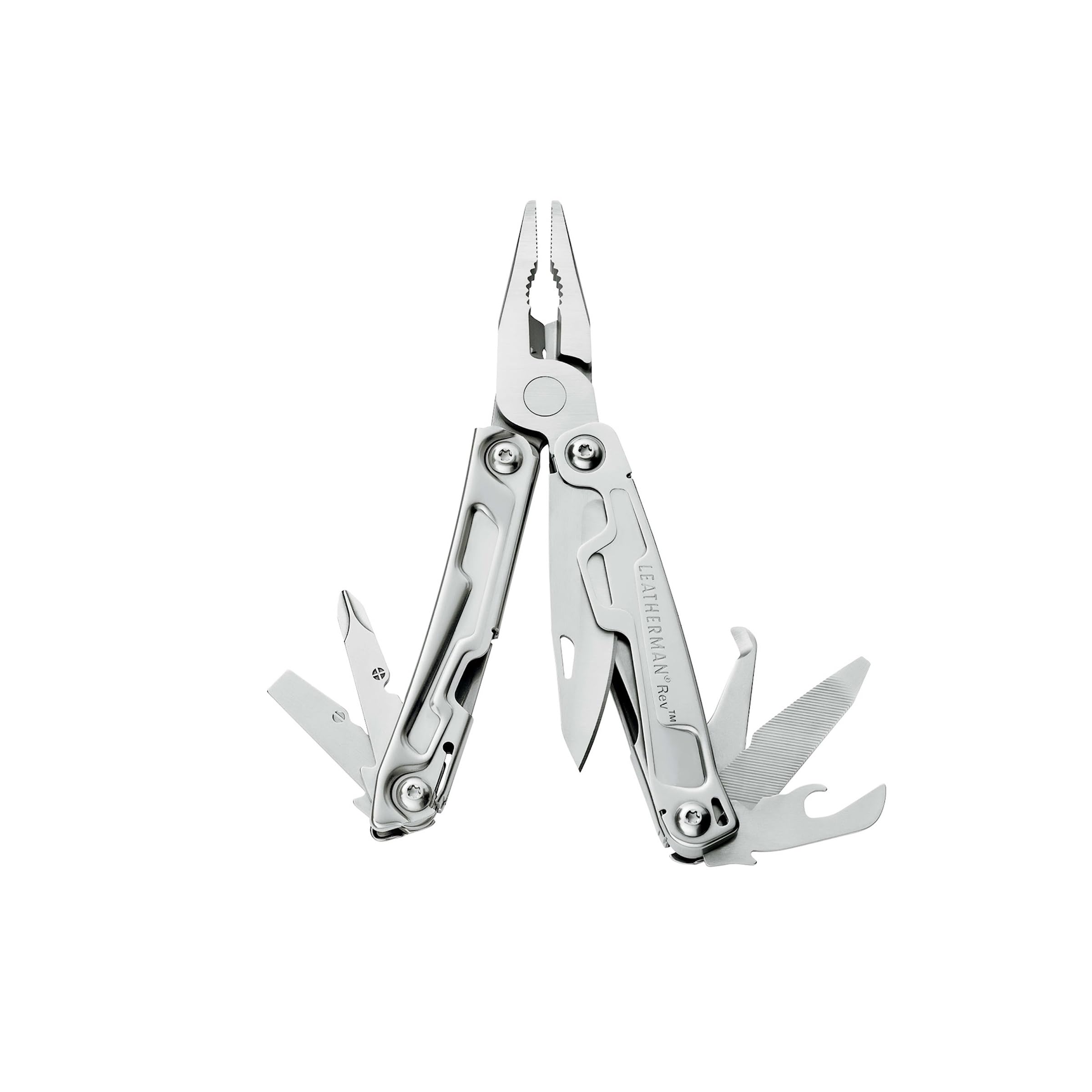
LEATHERMAN, Rev Pocket Size Multitool with Package Opener and Screwdrivers, Stainless Steel
A TOOL BOX IN YOUR POCKET: A small but versatile and high-functional multitool with the essentials and more; Put it to the test under the hood, at the campground or around the house • 14 TOOLS IN 1: Needlenose and regular pliers, hard and regular wire cutters, wire stripper, knife, package opener, wood/metal file, can and bottle openers, ruler, Phillips screwdrivers and more • OUR GUARANTEE: We’re proud to stand behind every product that leaves our factory in Portland, Oregon; That’s why we offer our 25-year warranty, so you can be confident your Leatherman lasts a lifetime