Disclosure: This post contains affiliate links. If you click a link and make a purchase, we may earn a commission at no extra cost to you. We only recommend products we trust.
When preparing for emergencies, natural disasters, or outdoor adventures, choosing the right survival rations can mean the difference between comfort and hardship. Emergency food bars and Meals Ready-to-Eat (MREs) represent two distinct approaches to emergency nutrition. Food bars offer compact, lightweight energy in a simple package, while MREs provide complete meals with variety and familiar flavors. This comprehensive comparison examines both options across critical criteria including nutritional value, shelf life, portability, taste, preparation requirements, and cost-effectiveness. Whether you’re building a bug-out bag, stocking a shelter, or planning extended wilderness expeditions, understanding the strengths and limitations of each option will help you make the best choice for your specific survival scenario and emergency food storage needs.
Quick Comparison
| Criteria | Emergency Food Bars | MREs (Meals Ready-to-Eat) |
|---|---|---|
| Shelf Life | 5 years (up to 10 years in optimal conditions) | 3-5 years (temperature dependent) |
| Caloric Density | 400-410 calories per bar, 3600+ per package | 1200-1300 calories per meal |
| Weight & Portability | Extremely lightweight (1-2 lbs per 3600 cal) | Heavy (1.5-2 lbs per meal) |
| Preparation Required | None – ready to eat immediately | Optional heating, water for some items |
| Taste & Variety | Limited flavors, cookie-like texture | Wide variety, full meal experience |
| Nutritional Balance | High carbs, basic vitamins/minerals | Balanced macros, complete meals |
| Cost per Calorie | $0.005-0.007 per calorie | $0.008-0.012 per calorie |
| Psychological Comfort | Functional but monotonous | Familiar meal experience, morale boost |
| Water Requirements | Minimal (can be eaten dry) | Moderate (for beverages and some items) |
| Storage Space | Extremely compact | Bulky packaging |
Detailed Analysis
Emergency Food Bars
Emergency food bars are dense, compact survival rations designed to provide maximum calories in minimal space. Typically made from compressed grains, fats, and fortified with essential vitamins and minerals, these bars are engineered for long-term storage and immediate consumption without preparation. Products like the S.O.S. Rations Emergency 3600 Calorie Food Bar offer Coast Guard-approved reliability with a 5-year shelf life under all climatic conditions. Each package contains multiple bars (usually 9) that collectively provide a full day’s worth of calories. The texture is similar to a dense shortbread cookie, with flavors like cinnamon and coconut to improve palatability. These bars are specifically formulated to be non-thirst provoking, an important consideration when water may be scarce.
Pros
- Exceptional shelf life of 5+ years with minimal storage requirements
- Extremely lightweight and compact for maximum portability
- No preparation needed – eat straight from package
- Coast Guard approved for life-sustaining nutrition
- Non-thirst provoking formulation conserves water
- Excellent cost per calorie ratio
- Withstands extreme temperature fluctuations
- Individual bars allow portion control
- Fortified with essential vitamins and minerals
Cons
- Limited flavor variety becomes monotonous over time
- Dense, dry texture may be unpalatable to some
- High carbohydrate content with limited protein
- Not a psychologically satisfying meal experience
- Can be crumbly and messy to eat
- May cause digestive issues if consumed exclusively
- Lacks the variety needed for long-term morale
- Not suitable for those with wheat allergies (most brands)
Best For: Bug-out bags, emergency vehicle kits, life rafts, minimalist preppers, weight-conscious hikers, short-term survival situations (72 hours to 2 weeks), and scenarios where space and weight are critical constraints. Ideal for those prioritizing pure survival calories over meal enjoyment.
Rating: 8.5/10
MREs (Meals Ready-to-Eat)
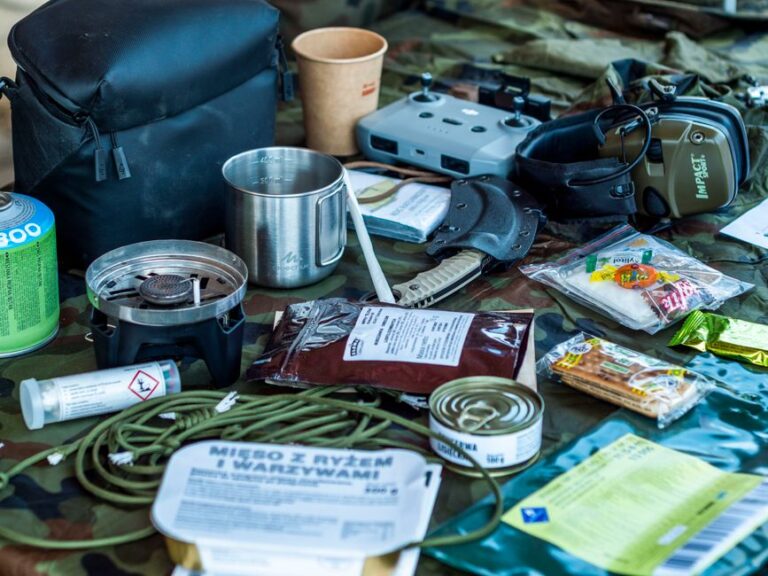
MREs are self-contained military-grade meal packages originally developed for soldiers in field conditions. Each MRE contains a complete meal with an entrée, side dish, dessert, crackers, spread, beverage mix, utensils, and often a flameless ration heater. With dozens of menu options ranging from spaghetti to chicken fajitas, MREs provide familiar, comforting meals that closely resemble home-cooked food. They offer balanced nutrition with proper ratios of proteins, carbohydrates, and fats, along with adequate vitamins and minerals. While they can be eaten cold, heating significantly improves taste and provides psychological comfort. MREs are designed to sustain active individuals for extended periods, making them popular among military personnel, campers, and serious preppers who prioritize meal quality and variety.
Pros
- Wide variety of menu options prevents flavor fatigue
- Nutritionally balanced with proper macro ratios
- Psychologically satisfying full meal experience
- Can be heated for comfort or eaten cold
- Includes accessories (utensils, condiments, desserts)
- Proven military reliability and testing
- Better protein content than food bars
- Suitable for extended survival situations
- Flameless heaters provide hot meals without fire
- More socially acceptable for group situations
Cons
- Heavy and bulky compared to food bars
- Shorter shelf life (3-5 years, temperature sensitive)
- Significantly more expensive per calorie
- Requires more storage space
- Generates substantial waste/packaging
- Some items require water for preparation
- Quality varies significantly between manufacturers
- Can be difficult to eat while moving
- Heating accessories add weight and complexity
- May contain allergens across multiple components
Best For: Long-term survival scenarios (2+ weeks), base camps, vehicle emergency kits with ample space, family emergency preparedness, situations where morale is important, preppers with storage space, and anyone who values meal variety and psychological comfort during emergencies. Excellent for stationary survival situations.
Rating: 8/10
Category Winners
Best for Portability
Winner: Emergency Food Bars
Food bars deliver maximum calories with minimum weight and volume. A single 3600-calorie package weighs just 1-2 pounds and fits easily in a cargo pocket, while equivalent MRE calories would require three meals weighing 4.5-6 pounds with significantly more bulk. For bug-out bags, vehicle kits, or any situation where every ounce matters, food bars are unmatched.
Best for Long-Term Storage
Winner: Emergency Food Bars
With Coast Guard-approved 5-year shelf life under all climatic conditions and potential for 10+ years in optimal storage, food bars outperform MREs’ temperature-sensitive 3-5 year lifespan. Food bars can withstand extreme temperature fluctuations without degradation, making them ideal for vehicle storage and unpredictable environments.
Best for Meal Satisfaction
Winner: MREs
MREs provide a complete, familiar meal experience with variety, proper nutrition balance, and psychological comfort. The ability to enjoy a hot spaghetti dinner or chicken fajitas during a crisis provides significant morale benefits that shouldn’t be underestimated in survival situations. The variety of 24+ menu options prevents flavor fatigue during extended emergencies.
Best Value
Winner: Emergency Food Bars
At approximately $0.005-0.007 per calorie compared to MREs’ $0.008-0.012 per calorie, food bars deliver superior cost efficiency. The S.O.S. Rations 3600 Calorie Food Bar at $18.04 for two packs provides 7,364 calories total, or about $0.0024 per calorie, making it one of the most economical emergency food options available.
Best for Water Conservation
Winner: Emergency Food Bars
Food bars are specifically formulated to be non-thirst provoking and can be consumed without any water. MREs require water for beverage mixes and optimal preparation of some items. In scenarios where water is scarce or must be rationed, food bars allow you to maximize caloric intake while minimizing water consumption.
Best for Nutritional Balance
Winner: MREs
MREs provide balanced macronutrients with adequate protein (10-15g per meal), complex carbohydrates, healthy fats, and comprehensive vitamin/mineral profiles. Food bars are heavily carbohydrate-focused with minimal protein, making MREs superior for maintaining muscle mass and overall health during extended survival situations.
Overall Verdict
Both emergency food bars and MREs serve important but different roles in emergency preparedness. Food bars excel in scenarios demanding maximum portability, long-term storage, and simplicity, making them ideal for bug-out bags, vehicle kits, and short-term survival situations. Their unmatched caloric density, shelf life, and cost-effectiveness make them the practical choice for weight-conscious preppers. MREs shine in stationary survival scenarios where weight is less critical and psychological comfort matters. Their variety, nutritional balance, and satisfying meal experience make them superior for extended emergencies, base camps, and family preparedness. The optimal strategy for most preppers is maintaining both: food bars for mobile emergency kits and initial crisis response, and MREs for home storage and longer-term survival scenarios. This hybrid approach provides the flexibility to adapt to different emergency situations while maximizing both practical efficiency and psychological resilience.
Best Overall: Emergency Food Bars
Best for Beginners: Emergency Food Bars
Best Value: Emergency Food Bars (S.O.S. Rations 3600 Calorie Food Bar)
Frequently Asked Questions
Can you survive on emergency food bars alone for extended periods?
Yes, you can survive on emergency food bars for extended periods as they’re specifically designed to sustain life and are fortified with essential vitamins and minerals. Products like S.O.S. Rations are Coast Guard approved for life-sustaining nutrition. However, while they’ll keep you alive, exclusive consumption beyond 2-3 weeks may lead to digestive discomfort, nutrient imbalances, and psychological strain due to monotony. The high carbohydrate, low protein content isn’t optimal for maintaining muscle mass during extended survival. For scenarios longer than two weeks, supplementing with additional protein sources or alternating with MREs provides better nutritional balance and psychological well-being.
How do emergency food bars and MREs compare in extreme temperatures?
Emergency food bars significantly outperform MREs in extreme temperatures. Food bars are designed to withstand -40°F to 140°F without degradation and maintain their 5-year shelf life under all climatic conditions. They won’t freeze solid in extreme cold and won’t melt or spoil in extreme heat. MREs are much more temperature-sensitive: high heat (above 100°F) dramatically reduces shelf life and can cause packaging failures, while extreme cold makes them difficult to eat without heating. For vehicle emergency kits, outdoor caches, or storage in non-climate-controlled areas, food bars are far more reliable. MREs require temperature management to maintain quality and safety.
Which is better for a 72-hour emergency kit: food bars or MREs?
For 72-hour emergency kits, food bars are generally superior due to their compact size, light weight, zero preparation requirements, and long shelf life without maintenance. A 72-hour kit needs to be portable and ready for immediate evacuation, where every ounce and inch matters. Three days of food bars (approximately 10,800 calories) weighs about 4.5 pounds and fits in a small space, while equivalent MRE calories would weigh 13-18 pounds and require significantly more room. Food bars also eliminate the need to carry water for preparation. However, if your 72-hour kit is vehicle-based with ample space, including a few MREs for psychological comfort and meal variety can boost morale during a stressful situation without significantly compromising portability.
Do emergency food bars require water to eat safely?
No, emergency food bars are specifically formulated to be non-thirst provoking and can be safely consumed without water. This is a critical design feature that distinguishes them from regular energy bars or survival foods. The formulation balances ingredients to minimize the body’s water requirements for digestion and metabolism. However, having water available is always preferable for comfort and optimal hydration. In contrast, MREs benefit significantly from water for beverage preparation and some food items, making them less ideal for water-scarce situations. This makes food bars superior for desert environments, life rafts, or any scenario where water must be strictly rationed.
How long do opened emergency food bars and MREs last?
Once opened, emergency food bars should be