Disclosure: This post contains affiliate links. If you click a link and make a purchase, we may earn a commission at no extra cost to you. We only recommend products we trust.
When your life depends on your equipment, military-grade survival gear becomes more than just tools—it transforms into lifelines that separate survival from catastrophe. Military survival gear has evolved through decades of real-world testing in the harshest environments on Earth, from Arctic tundra to desert wastelands, refined by lessons learned when failure meant death. Whether you’re preparing for wilderness emergencies, natural disasters, or extended backcountry expeditions, understanding the principles behind military survival equipment selection will dramatically increase your chances of making it home safely.
Why Military-Grade Survival Gear Matters More Than Ever
The outdoor recreation and emergency preparedness markets have experienced explosive growth in recent years, with survival gear sales increasing substantially as more people recognize the importance of self-reliance in uncertain times. Natural disasters are occurring with greater frequency and intensity, while backcountry recreation continues to expand into more remote and challenging terrain. This convergence has created unprecedented demand for equipment that performs reliably when conventional support systems fail completely.
Military survival gear represents the pinnacle of field-tested reliability because it’s designed under a fundamentally different philosophy than consumer outdoor equipment. While commercial gear prioritizes comfort and convenience, military specifications demand equipment that functions flawlessly after being dropped from aircraft, submerged in water, exposed to extreme temperatures, and subjected to abuse that would destroy typical camping gear. The stakes in military operations are absolute—equipment failure can compromise missions and endanger lives—which means every component undergoes rigorous testing protocols that far exceed consumer product standards.
Understanding military gear principles empowers you to make informed decisions about your own survival equipment, even if you never purchase actual military-issue items. The evaluation criteria used by military procurement specialists—durability, multi-functionality, weight-to-utility ratio, and field maintainability—provide a framework for assessing any survival gear. Recent analysis of search and rescue operations reveals that equipment failure contributes to a significant percentage of preventable wilderness emergencies, with inadequate fire-starting tools, failed navigation equipment, and compromised shelter systems ranking among the most common gear-related problems. Adopting military-grade standards for your critical survival items dramatically reduces these failure points.
Core Principles of Military Survival Equipment Selection
Military survival gear selection follows a systematic hierarchy based on the survival priorities that determine life expectancy in emergency situations. The military’s survival priority sequence—protection from environmental hazards, signaling and rescue, water procurement, and food acquisition—directly influences which equipment receives the most rigorous specifications and the greatest weight allocation in survival kits. This prioritization reflects physiological reality: you can survive approximately three hours in harsh weather without proper protection, three days without water, but three weeks without food, making shelter and water procurement tools far more critical than hunting equipment in most scenarios.
The concept of redundancy and backup systems permeates military survival gear philosophy in ways that recreational users often overlook. Military survival kits typically include multiple methods for accomplishing critical tasks, recognizing that single-point failures in extreme conditions can prove fatal. For fire-starting capability, this means carrying waterproof matches, a reliable lighter, ferrocerium rod, and potentially even a magnifying lens or battery-based ignition method. While this approach adds weight, it ensures that you maintain fire-starting capability even if your primary method fails, gets lost, or becomes damaged during the emergency that necessitated survival mode in the first place.
Multi-functionality represents another cornerstone principle that distinguishes military survival gear from single-purpose recreational equipment. A quality survival knife like the Gerber StrongArm serves not just as a cutting tool but as a prying device, hammer, digging implement, and even a makeshift spear point when lashed to a pole. This multi-purpose capability reduces the total number of items you must carry while ensuring you have tools capable of addressing unexpected challenges. The StrongArm’s full-tang construction, rubberized grip, and striking pommel exemplify how military-grade tools integrate multiple functions into a single robust platform that won’t fail when you need it most.
Weight efficiency and packability create constant tension in survival gear selection, particularly for military applications where personnel must carry equipment over long distances while maintaining combat readiness. The military addresses this through careful material selection and design optimization, choosing titanium over steel where weight savings justify the cost, and designing equipment that nests together or serves multiple roles. Modern military survival gear increasingly incorporates advanced materials like ripstop nylon, aerospace-grade aluminum, and high-performance polymers that deliver exceptional strength-to-weight ratios. Understanding these material properties helps you evaluate whether civilian survival gear meets military-grade standards or simply carries military-style marketing without the substance.
Essential Military Survival Gear Categories and Selection Criteria
Cutting tools form the foundation of any serious survival kit, with fixed-blade knives preferred over folders for critical survival applications due to their superior strength and reliability. Military survival knives typically feature full-tang construction where the blade steel extends completely through the handle, creating a single-piece tool that cannot separate or fail at the junction point. The blade length generally falls between four and six inches—long enough for substantial cutting tasks but short enough for detailed work and safe handling in confined spaces.
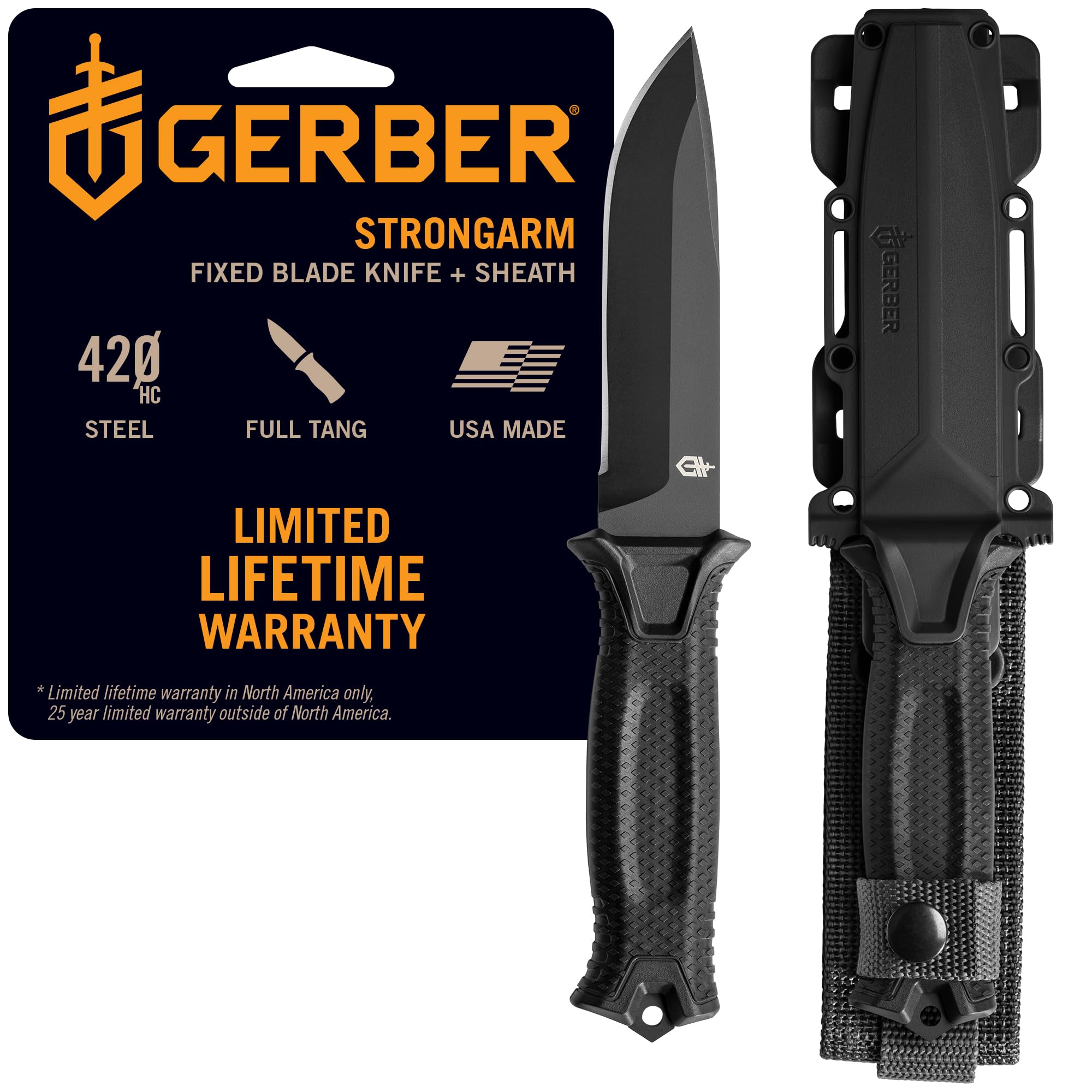
Gerber Gear StrongArm Fixed Blade Knife – Tactical Survival Knife for Camping & Hunting – Made in USA – Plain Edge – Black Plain edge Black 4.8″
Iconic Strongarm Design: This Gerber Gear fixed blade knife features a full-tang, 420HC Steel with a plain edge that’s renowned for its corrosion resistance, edge retention, and strength • Dependable Cutting Knife: Our camping knife boasts a rubberized diamond-texture grip for secure handling • Versatile Knife Sheath: The StrongArm knife includes a MOLLE-compatible sheath for adaptable carry options, ensuring the hunting knife is accessible
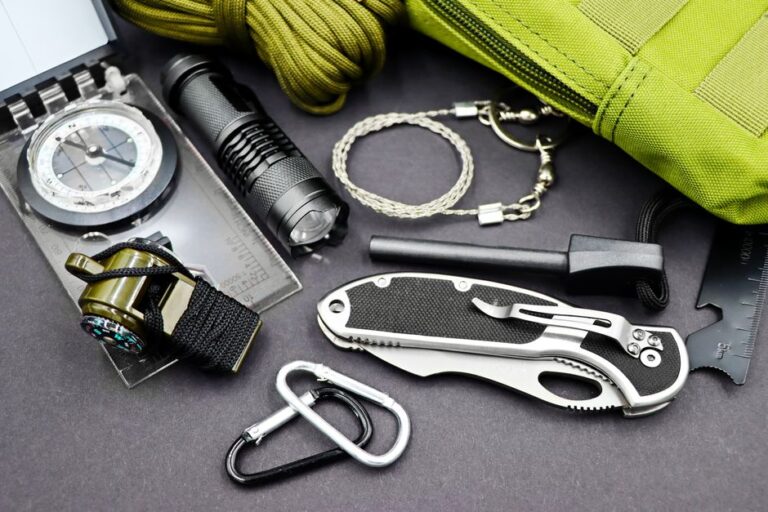
Fire-starting equipment deserves redundant systems because the ability to create fire on demand transforms your survival prospects dramatically, providing warmth, water purification, signaling capability, and psychological comfort. Military survival kits typically include both friction-based and chemical ignition methods, recognizing that wet conditions can compromise certain fire-starting techniques. Ferrocerium rods produce sparks exceeding three thousand degrees Fahrenheit and function when wet, making them exceptionally reliable primary fire-starters. Pairing a ferro rod with waterproof matches and a quality lighter creates a three-tier system where you’re never dependent on a single ignition method. The ALBATROSS tactical knife integrates a magnesium fire starter directly into the handle, exemplifying the military principle of combining critical survival functions into a single carry item.

ALBATROSS 6-in-1 Survival Tactical Military Folding Pocket Knives with LED Light,Seatbelt Cutter,Glass Breaker,Magnesium Fire Starter,Bottle Opener;Multi-Function Emergency Tool(Black)
Ultimate 6-in-1 Survival Tool: Professional-grade folding knife with integrated LED light, seatbelt cutter, glass breaker, magnesium fire starter, and bottle opener – your complete emergency preparedness solution. • Ideal Tactical Dimensions: 8.5″ when extended with a 3.5″ blade, folds to a compact 5″ for easy carrying. Weighs just 5.5 oz – perfectly balanced for precision control while remaining lightweight for everyday carry (EDC). • Military-Grade Materials: Crafted with high quality stainless steel blade featuring black oxide coating for corrosion resistance and reduced reflection. Ergonomic aircraft-grade aluminum handle with anodized finish provides excellent grip in all weather conditions.
Water procurement and purification equipment ranks immediately after shelter and fire in survival priority because dehydration degrades decision-making ability and physical performance within hours in hot environments. Military water purification systems range from chemical tablets and portable filters to UV sterilization devices, each with distinct advantages and limitations. Chemical purification tablets work reliably but require wait times and can leave unpleasant tastes, while mechanical filters provide immediate results but can freeze or clog. Carrying multiple purification methods ensures you can adapt to different water sources and equipment failures. A stainless steel container serves triple duty by allowing you to collect water, purify it through boiling, and cook food, demonstrating the multi-functionality principle that defines military gear selection.
Signaling and navigation equipment receives significant emphasis in military survival training because self-rescue through navigation or attracting rescue attention often provides faster extraction than waiting for searchers to locate you. Modern military survival kits include multiple signaling methods: signal mirrors for daytime visual contact, whistles for audio signaling that carries farther than shouting, and strobe lights or chemical light sticks for nighttime visibility. Navigation tools should include both electronic GPS devices and traditional map-and-compass systems, recognizing that batteries fail and electronics break. The military teaches navigation as a fundamental skill precisely because equipment-dependent navigation creates vulnerability when that equipment fails in the field.
Common Gear Failures and How to Prevent Them
The most frequent survival gear failure stems not from equipment defects but from user unfamiliarity with their tools under stress conditions. Military survival training emphasizes hands-on practice with every piece of equipment because knowing theoretically how a ferro rod works differs dramatically from successfully starting a fire with cold, wet hands in windy conditions after dark. Search and rescue reports consistently document cases where individuals carried quality survival gear but couldn’t effectively deploy it during actual emergencies. Your survival gear kit should include a training component: practice fire-starting with each method you carry, set up your emergency shelter in your backyard, and purify water using your chosen system before you need these skills in a life-threatening situation.
Over-reliance on electronic devices represents another critical vulnerability that has increased as GPS units, smartphones, and electronic navigation tools have become ubiquitous. Recent wilderness rescue statistics reveal a troubling trend where individuals venture into remote areas with only electronic navigation, then become completely disoriented when batteries die or devices fail. Military protocols mandate backup systems for all critical functions, which means carrying paper maps, a quality compass, and the knowledge to use them effectively even when you normally rely on GPS. The same principle applies to lighting—LED headlamps provide excellent illumination but become useless when batteries fail, making backup chemical light sticks or candles essential for extended emergencies.
Inadequate gear maintenance and inspection creates preventable failures that compromise survival capability when you most need it. Military equipment protocols require regular inspection and maintenance schedules because gear degrades over time even when not actively used. Your survival kit stored in a vehicle or backpack requires periodic inspection: check that knife blades remain sharp and rust-free, verify that fire-starting materials haven’t absorbed moisture, confirm that batteries retain charge, and ensure that cordage hasn’t degraded from UV exposure. Replace consumable items like water purification tablets before they expire, and test equipment functionality rather than assuming it will work when needed. A quarterly gear inspection takes minimal time but prevents discovering critical equipment failures during actual emergencies when replacement becomes impossible.
Building Your Military-Grade Survival Kit: A Phased Approach
Begin your military-grade survival kit development by addressing the immediate survival priorities that determine life expectancy in the environments where you spend time. Your first-phase acquisitions should focus on the core survival triad: fire-starting capability, cutting tools, and water purification. Invest in quality items for these critical functions rather than budget alternatives, because these tools must perform flawlessly under the worst possible conditions. A reliable fixed-blade knife, redundant fire-starting systems, and proven water purification methods form the foundation upon which you’ll build more comprehensive capabilities. This initial investment typically ranges from one hundred fifty to three hundred dollars but provides the essential tools that address the most immediate survival threats.
Phase two expands your capabilities into shelter, signaling, and navigation systems that transform short-term survival into sustained self-rescue capability. Add an emergency shelter system appropriate for your climate—this might include a military-grade tarp, emergency bivy, or compact tent depending on your typical environments and season. Incorporate signaling devices including a signal mirror, whistle, and emergency strobe light to maximize rescue probability. Upgrade your navigation capability with quality maps of areas you frequent, a reliable compass, and potentially a GPS unit as a primary navigation tool backed by traditional methods. This phase typically requires an additional two hundred to four hundred dollars but dramatically extends your survival capability from days to weeks.
The third phase addresses longer-term sustainability and specialized tools for your specific environments and activities. This might include fishing equipment for areas with water resources, additional cordage and repair materials, enhanced first aid capabilities beyond basic trauma care, and specialized tools like folding saws or multi-tools that expand your capability to construct shelters and process resources. Focus these additions on your actual use patterns rather than accumulating gear for hypothetical scenarios—a desert traveler needs different specialized equipment than someone who primarily ventures into alpine environments. This ongoing refinement process continues throughout your outdoor career as you identify gaps through training exercises and real-world experience, with annual investments of one hundred to two hundred dollars maintaining and upgrading your capabilities as equipment wears out or better options become available.
Frequently Asked Questions
What’s the difference between military survival gear and regular camping equipment?
Military survival gear is designed to function reliably under extreme abuse and environmental conditions that would destroy typical camping equipment. Military specifications require equipment to work after being dropped, sub